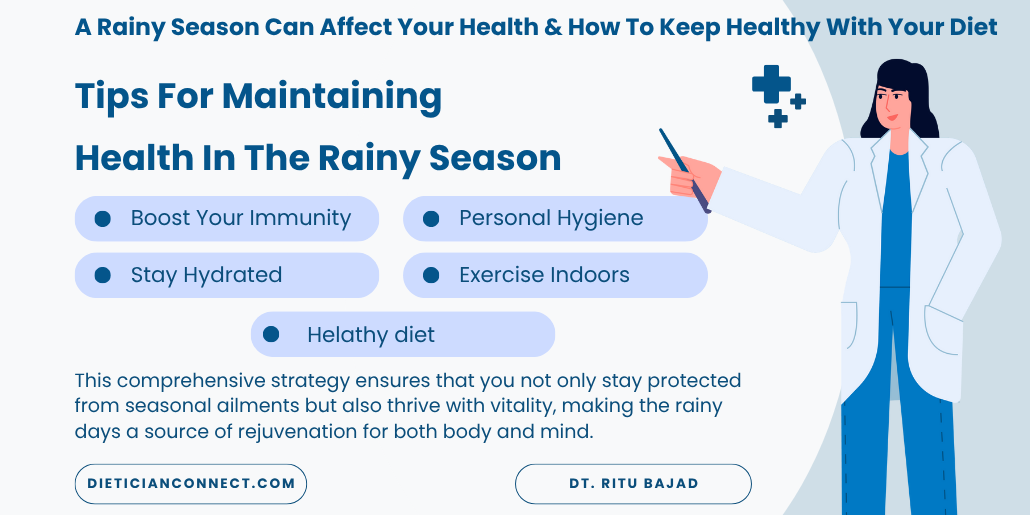
A Rainy Season Can Affect Your Health & How to Stay Healthy with Your Diet
A rainy season diet is a style of eating that fits to your body's climate and conditions during wet, rainy, or stormy seasons rather than a set diet plan.
A supportive diet can be beneficial because stormy downfall is permitted to impact digestion, immunity, and mood in a variety of traditional systems, including Ayurveda.
Rainy Season Affect Your Health -
There are a number of ways that rainy weather can impact our health. Here are a few typical outcomes:
- A higher chance of infections
Colds and the flu: Lower temperatures and moist surroundings can impair immunity and facilitate the spread of viruses.
Respiratory Problems: Asthma or allergies may worsen due to the growth of mold and mildew in moist environments.
- Pain in the Joints and Muscles
Rainy weather is often associated with increased pain for people with arthritis. Changes in barometric pressure that impact joints could be the cause of this.
- Mental Health & Mood
Seasonal Affective Disorder (SAD): Low serotonin levels brought on by less sunlight can result in depressive or lethargic feeling & exhausted.
- Fungal Infections
Because they retain moisture, damp shoes or clothes can cause skin infections or athlete's foot.
- Migraines or Headaches
Some people report more migraines during rainy weather because they are more sensitive to the pressure changes that storms bring about.
Why Rainy Weather Affects Diet –
- Humidity and moisture can impair digestion during stormy rainstorms.
- Infections are a serious problem (caused by weakened food and water).
- People may observe low energy, Bloating, common abdominal pain.
The principles of the rainy weather diet are also what a stormy downfall diet consistently consists of –
- Light, Cooked, and Warm Foods Steer clear of raw or cold Select reflections that are easily steam, grilled. lessens internal moisture and aids in improving digestion.
- Digestion-Boosting Spices Add cinnamon, cumin, turmeric, pepper, ginger, and garlic. These hot spices improve bloating, combat infections, and speed up metabolism.
- Consume seasonal food.
- Steer clear of stale and fermented foods. In sticky conditions, these can result in indigestion and gas.
- Remain dishevelled — Exactly Sip boiled or warm water. Steer clear of excessive amounts of cold beverages or fruit because they can impair digestion.
Suggested Food Type –
- Multi grains, well-cooked rice, oats, and millets
- Veggies Bottle gourd, squash, and carrots (cooked), lentils.
- Fruits: papaya, apples, pears, and bananas (in moderation).
- Drinks: Warm lemon water, ginger tea, and herbal teas
- Consume warm, freshly prepared food.
- Drink water that has been boiled or filtered.
- Incorporate pepper, turmeric, ginger, and garlic into your food to improve digestion and immunity.
Not to consume –
Some foods should be avoided during the rainy season due to the increased risk of foodborne illnesses, bacterial growth, and humidity. When it rains, you should limit or stay away from the following food types:
- Food on the Street and Outdoor Snacks - The risk of contamination is increased by increased moisture and unsanitary preparation conditions.
- Raw or inadequately washed leafy vegetables - There is a significant risk of mud and waterborne bacterial contamination.
- Seafood Reasons: Since many fish breed during the monsoon, freshness and quality may be harmed.
- Foods that are fermented - Humidity can cause spoiling by interfering with the fermentation process.
- Unpasteurized or improperly stored dairy products
- Slice Salads and Fruits from Outside
- Iced or Cold Drinks from Street Sellers
How to Maintain Your Health in Rainy Conditions:
- Remain warm and dry
- Bring an umbrella and waterproof shoes
- Eat well and get enough sleep to strengthen your immunity
- To prevent fungus, let wet shoes and clothing air dry completely
- If sunlight is scarce, think about taking a vitamin D supplement
- Consult with your doctor & dietician to stay healthy