PCOS Is Now PMOS: What Women Need to Know About This New Change
PCOS Is Now PMOS: What Women Need to Know
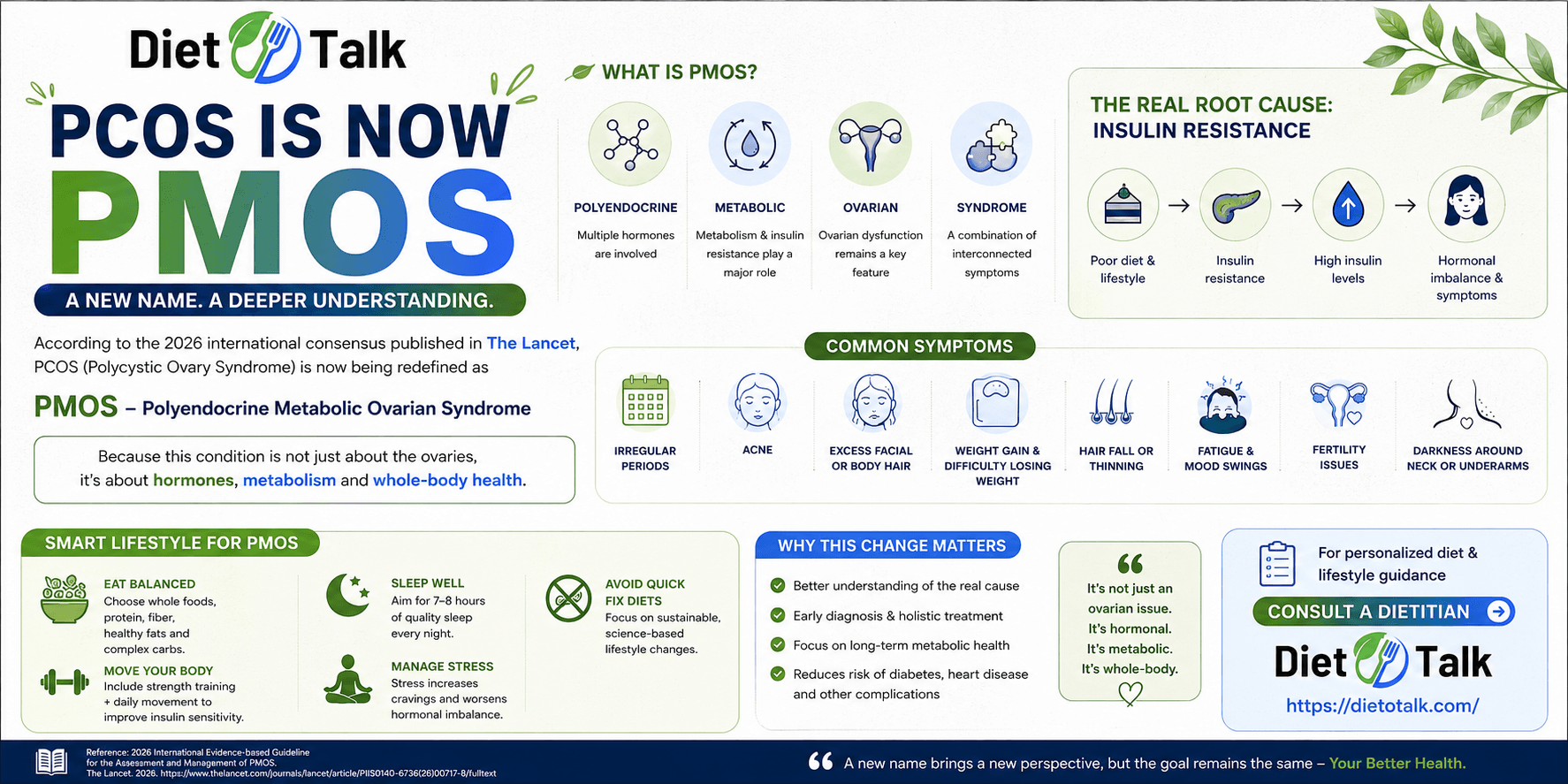
A major international medical consensus published in The Lancet has proposed changing the name PCOS (Polycystic Ovary Syndrome) to PMOS (Polyendocrine Metabolic Ovarian Syndrome).
Why? Because experts now believe the old name does not fully explain the condition.
Many women with PCOS:
- Do not actually have ovarian cysts
- Experience insulin resistance and metabolic issues
- Face symptoms beyond reproductive health
The new term “PMOS” highlights that this condition is not just about ovaries — it also involves hormones, metabolism, and long-term health.
Common Symptoms of PMOS
- Irregular periods
- Weight gain
- Acne
- Facial hair growth
- Hair fall
- Difficulty losing weight
- Fertility issues
- Dark pigmentation around neck or underarms
The Real Root Cause: Insulin Resistance
In many women, the body becomes resistant to insulin, leading to:
- Higher insulin levels
- Hormonal imbalance
- Increased androgen production
- Fat storage and cravings
This can increase the risk of:
- Type 2 diabetes
- Fatty liver
- High cholesterol
- Heart disease
That’s why “metabolic” is now included in the new name.
Best Lifestyle Approach
Managing PMOS focuses on improving metabolic health:
- Eat balanced, protein-rich meals
- Reduce ultra-processed foods
- Exercise regularly
- Include strength training
- Sleep properly
- Manage stress
Crash diets and random internet “PCOS cures” are not sustainable.
Conclusion
The shift from PCOS to PMOS reflects a better scientific understanding of the condition. It helps women recognize that this is a whole-body metabolic and hormonal disorder — not just an ovarian problem.
Early lifestyle changes and proper guidance can make a huge difference.
Reference:
International Evidence-based Guideline for the Assessment and Management of PMOS. The Lancet, 2026.